


Singleton is on the Fylde coastal plain, south-east of Poulton. The 2011 Census recorded 889 people as living here. Great Singleton is the larger part containing the village, whereas Little Singleton is a small area north of the village bordering the River Wyre.
This pretty little village, surrounded by farmland, is known as the ‘Model Village of the Fylde’. Travelling to the M55 motorway, the A585 bypasses around the edge of it. Why don’t you take a detour and have a look…
[arve url=”https://www.google.com/maps/embed?pb=!1m18!1m12!1m3!1d51019.23707106328!2d-2.995595358116037!3d53.83255661634114!2m3!1f0!2f0!3f0!3m2!1i1024!2i768!4f13.1!3m3!1m2!1s0x487b4257e36d2b2f%3A0xe2e618f6bd0021db!2sSingleton!5e0!3m2!1sen!2suk!4v1577690116720!5m2!1sen!2suk” title=”Google map showing location of Singleton Village” description=”Google map showing location of Singleton Village” /]
Singleton Fire Station
The small, stand-out fire station is probably the most popular landmark in the village. It was built by the Miller family in 1882 to house a horse drawn fire engine. It was manned by local volunteers. In the event of a fire the first job was to catch the horse that was grazing in a nearby field!

Now a Grade II listed building, the Fire Engine House became redundant in 1946. With it’s pargeted plaster panels and louvered bellcote it’s still very much a focal point today.
[arve url=”https://www.google.com/maps/embed?pb=!4v1577692349288!6m8!1m7!1s11R3X7cvp3gQSkEuu558IA!2m2!1d53.83667868914421!2d-2.940588447704046!3f101.75088162448338!4f7.152204611647974!5f0.7820865974627469″ title=”Singleton Fire Station, Google Earth” description=”Singleton Fire Station, Google Earth” /]
FREE Newsletter
FREE Newsletter

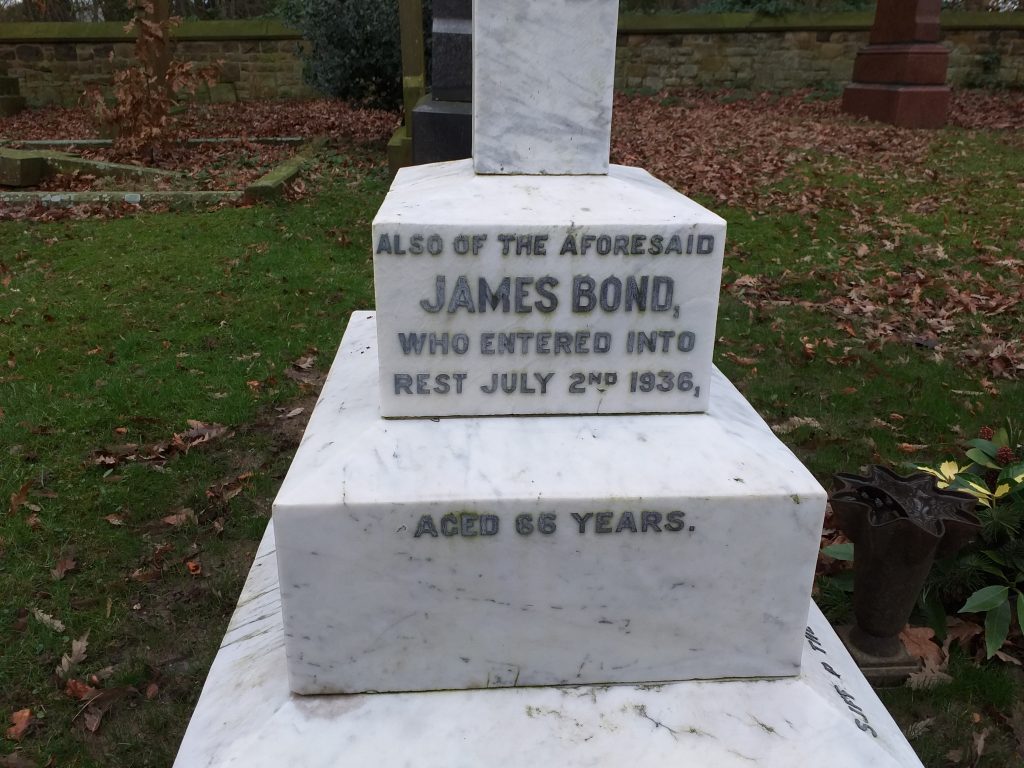
James Bond buried at Singleton!
John Gilder went to Singleton for a festive walk with his family and shared his photos with us –
John says “On a cool but calm afternoon on December 27, I visited the village for the first time. It was the perfect weather for a walk out and also to escape the domestic limbo that can often create a lull between Christmas and New Year.
“The phrase ‘a place where time stands still’ is certainly true of Singleton. What an absolutely delightful place this is. Manicured hedgerows are the norm, allowing lovely views across the Fylde.”
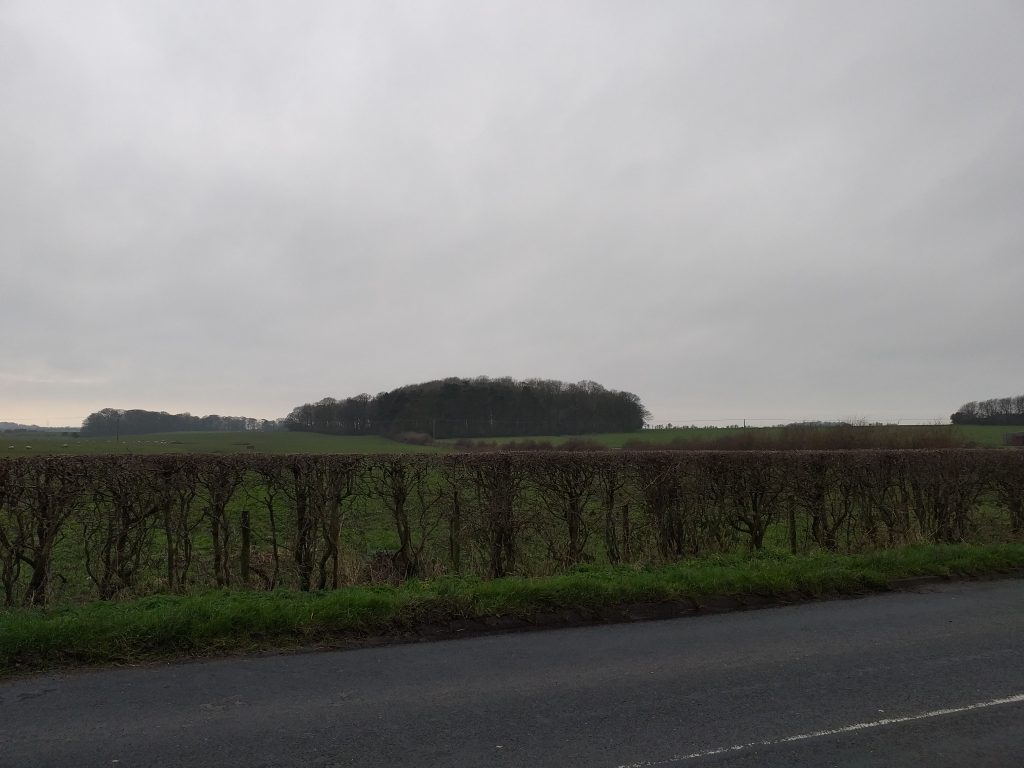
He continues, “I came across a group of people who were walking Alpacas which thrilled my daughter. It’s not what you might expect to encounter in a Fylde backwater!

“We saw the old fire station in all its glory and so many other features which were so typical of a ‘proper’ village.
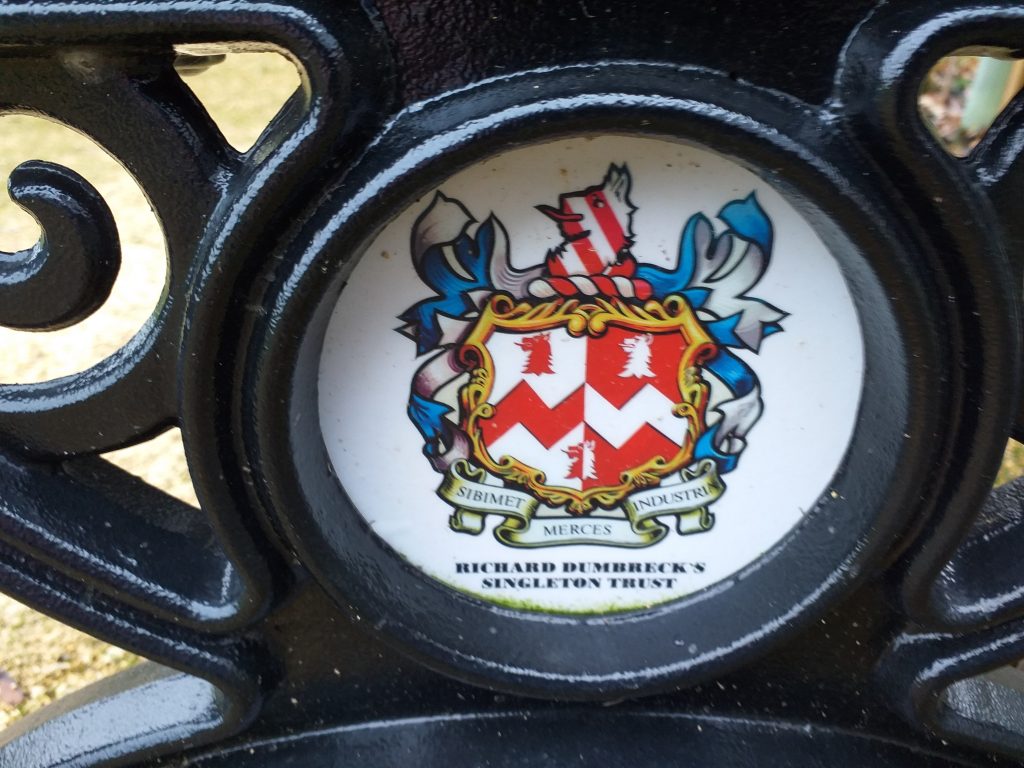
“But the biggest surprise of all was to see the grave of James Bond in St Anne’s churchyard!
“As the sky began to fall, I made my way home, witnessing the burgeoning buds on many trees and the activity of weeds to signal that spring is not that far away.”
History of Singleton
When the Romans invaded Britain, way back in the 1st century AD, this area was inhabited by a Celtic tribe called the Setantii. Much later, it’s recorded in 1086 in the Domesday Book as Singletun.
Then in the late nineteenth century it was remodelled as an estate village by Preston cotton magnate Thomas Miller, of Horrocks-Miller.
You’re probably familiar with the petrol station at the complicated traffic-light junction at Singleton. You might have spotted a large hall through the trees near to the junction. It’s Singleton Hall, a Gothic mansion built in 1873 for Thomas Horrocks Miller. He was the prominent Preston industrialist.
The Hall on Lodge Lane was later used by Lancashire County Council as a special school. It’s now private residences. The grounds are open to the public and maintained by the Richard Dumbreck Singleton Trust, endowed by Richard Dumbreck, a great-nephew of Thomas Horrocks Miller.
Richard Dumbreck’s Singleton Trust
The Trust was established in 2003, following the death of Richard Dumbreck. The landowner was so fond of the village and its community that he left his estate in trust for the benefit of the Singleton community.
The Trust owns much of the heart of the village of Great Singleton, together with a large acreage of farmland and woods. It has responsibility for the maintenance of this extensive estate that includes over 30 homes, a farm and 580 acres of land surrounding the village.
The Miller family also commissioned the building of St Anne’s parish church. Designed by Lancaster architect Edward Graham Paley it was completed in 1861. English Heritage designated the church a Grade II listed building.
[arve url=”https://www.facebook.com/plugins/post.php?href=https%3A%2F%2Fwww.facebook.com%2Finawemedia%2Fposts%2F3532813930092690&width=500″ title=”Aerial view of St Annes Church at Singleton” description=”Aerial view of St Annes Church at Singleton” /]
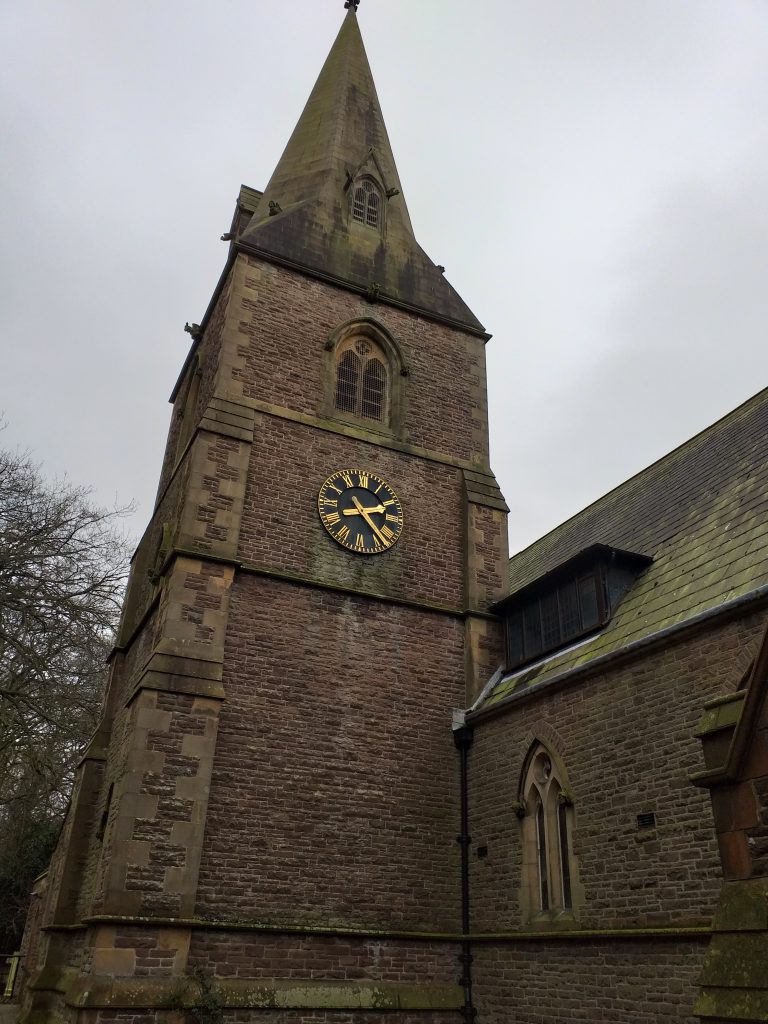
Did you know? That Singleton railway station once served the village as part of the Preston and Wyre Joint Railway. The station was west of the village, on the road to Blackpool.
Part of a History Mystery?
The village is connected to a long-running history-mystery, involving another sunken village off the coast of Cleveleys! Legend has it that inhabitants of Singleton Thorpe, once to be found off Rossall School, fled inland to Singleton following an inundation of water.
Whether it was a tsunami, bog burst or some other kind of avalanche of the tide, the inundation of water seems to have happened.
However, any connection between the two place names is where the puzzle lies…
And a Lancashire Witches Connection!
Did you know? Mag Shelton is said to have lived at Singleton. She was one of the more famous Lancashire Witches.
While you’re here…
Have a look at the homepage of the Visit Poulton-le-Fylde website for more of the latest updates.
Love the Fylde Coast? Sign up for your weekly email newsletter. Packed full of interesting things, it arrives in your inbox all 52 weeks of the year.
Join us on Facebook at our Visit Fylde Coast Facebook Group
Don’t forget to follow us on Twitter @visitFyldeCoast

We Need Your Help
We Need Your Help


Although I now live in Lincolnshire I was brought up in Singleton & went to the village school . I was taught by Miss Winkley &Miss Travis . I lived at 22 Church road